Biological mechanism
Enzyme activity, spore behavior, formulation stability, and the link between a biological system and a useful product.
TECNOLÓGICO DE MONTERREY / BIOTECHNOLOGY
A completed team design, followed by experiments and analytical projects from my biotechnology education.
CAPSTONE · TEAM PROJECT · 2026
An enzyme-and-spore cleaner concept, connected to the process needed to manufacture it.
As part of a five-person team, I helped develop a Bacillus licheniformis-based cleaner for pet stains and odors. Our final work connected the biological mechanism with fermentation, separation, formulation, equipment, plant layout, and economics.
The completed deliverable was an integrated engineering design and faculty presentation. The manufacturing process and product were proposed within the academic project; this was not a commercial launch or an operating plant.
My work: mass and energy balances, equipment sizing, the financial evaluation and the process model. I connected the proposed process with its material and energy requirements, equipment scale and financial assumptions.
Our team deliverable: the integrated academic engineering design and final faculty presentation. The product and manufacturing process were proposed, not commercially launched.
EXPLORE THE ORIGINAL 3D VISUALIZATION
Recovered from the original academic visualization. This earlier design iteration illustrates the process; the final presentation below records the final design.
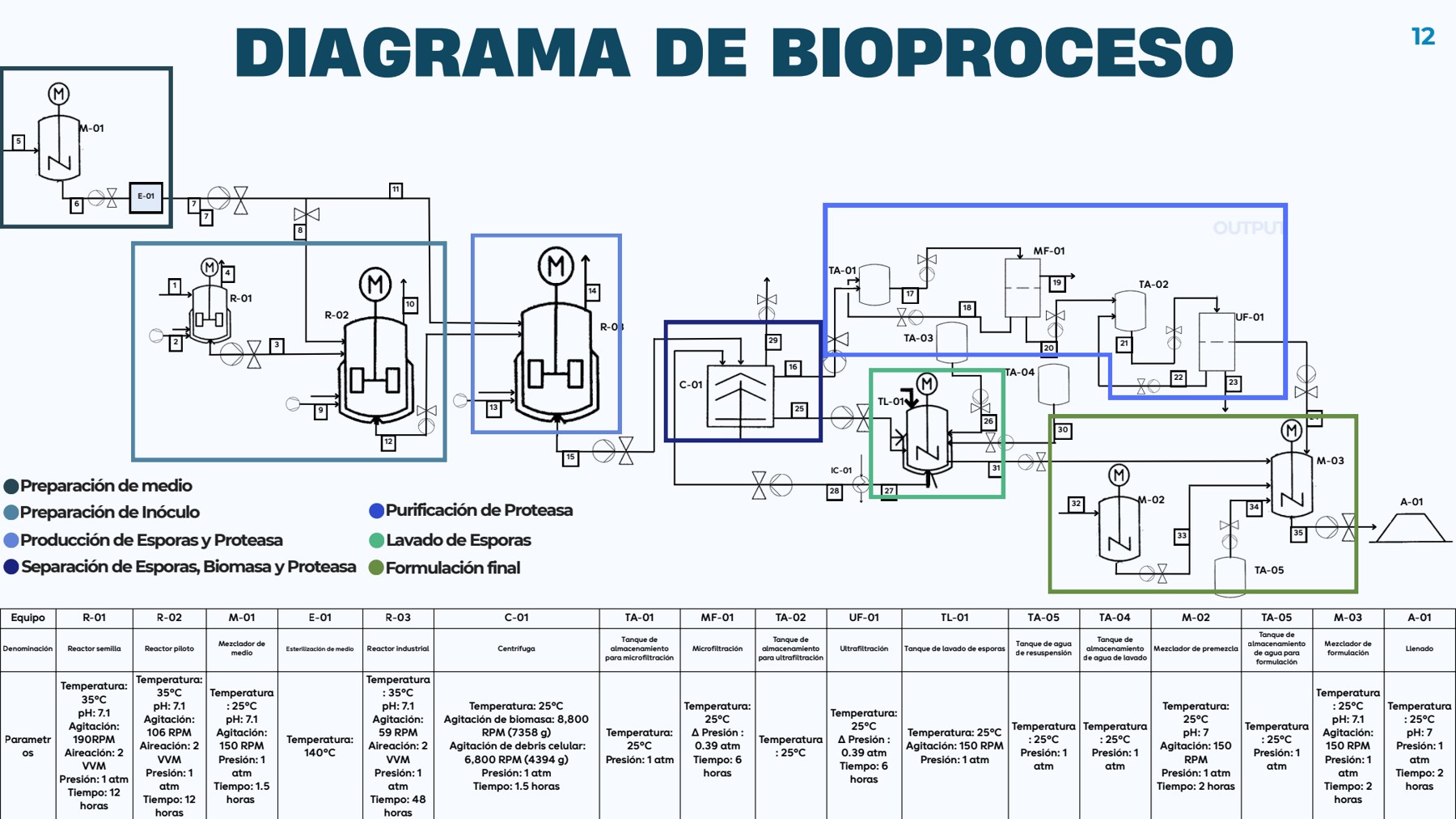
Our final process diagram connects media preparation, the seed train, enzyme and spore production, downstream recovery, formulation, and filling.
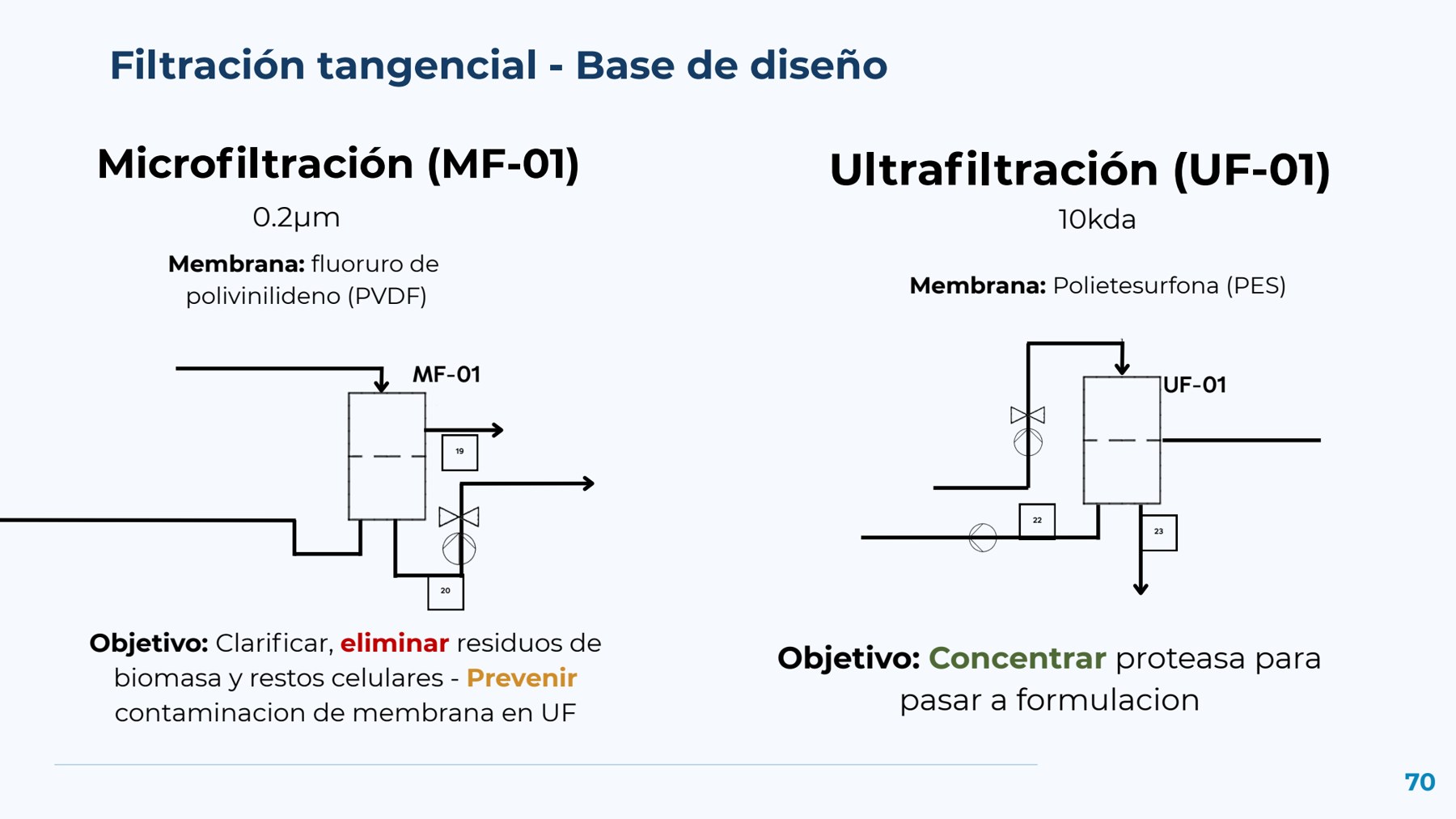
The design separates microfiltration for clarification from ultrafiltration for protease concentration, linking the separation duty to the product formulation.
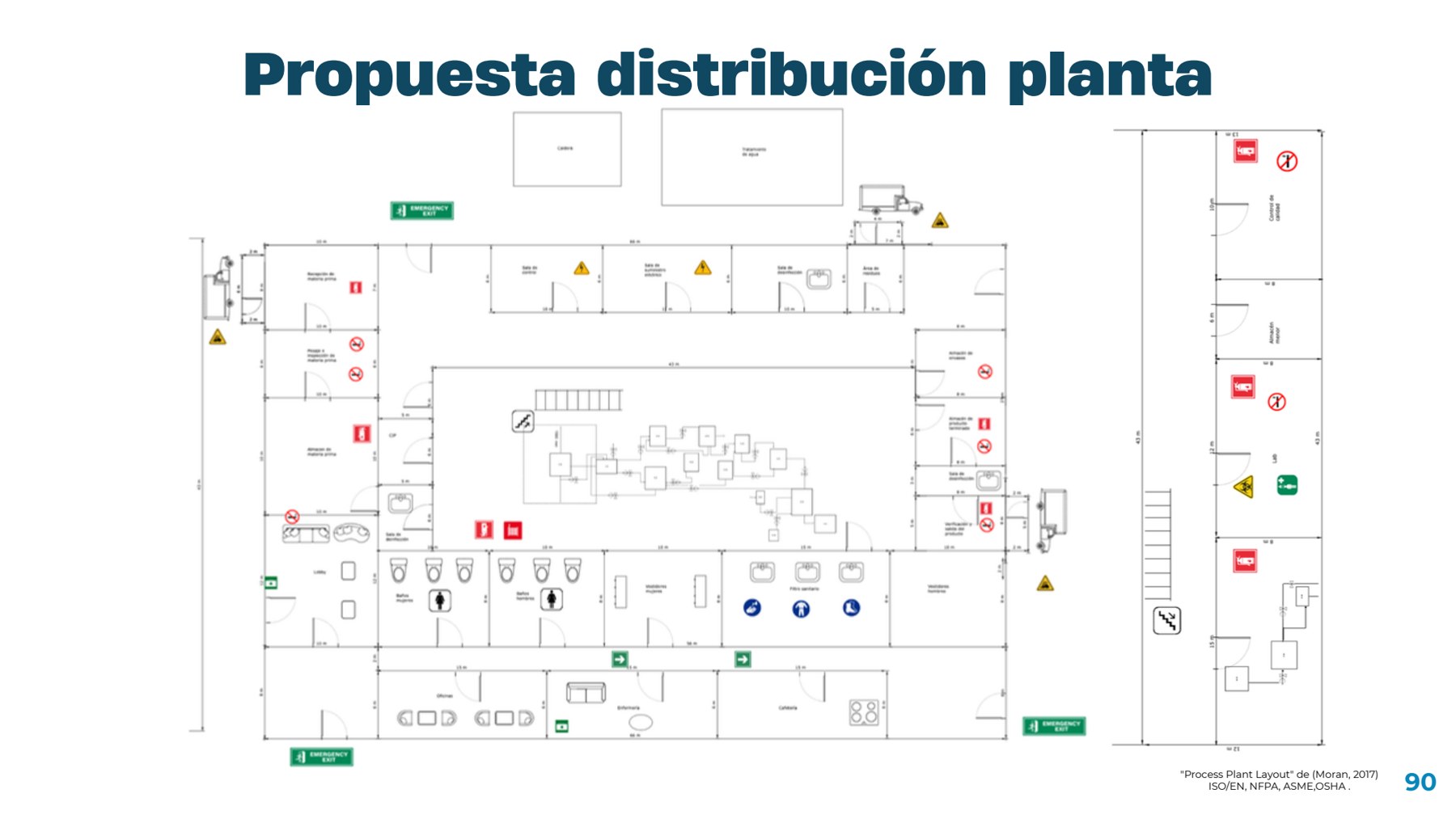
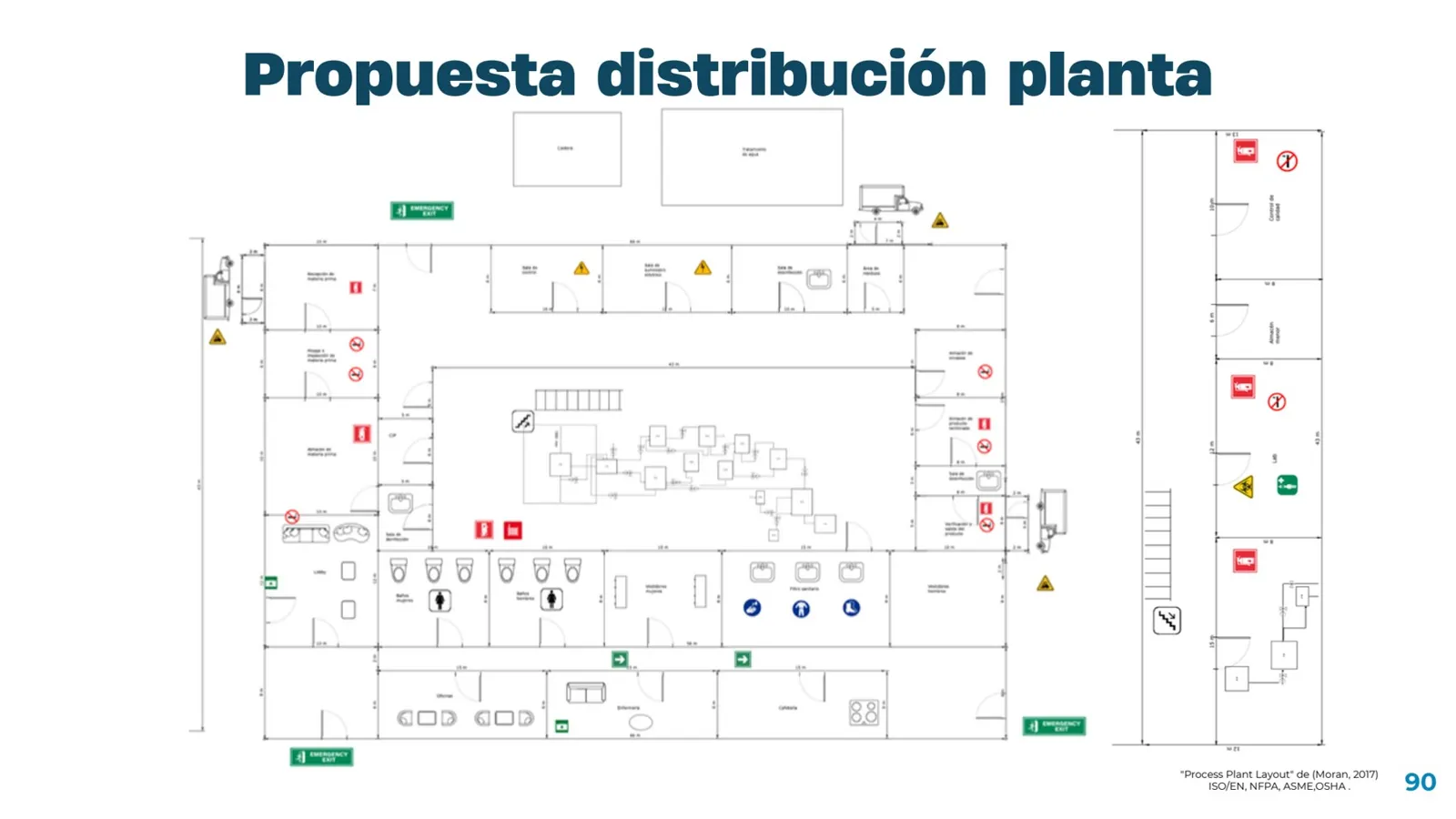
The proposed layout translates the process into work areas, circulation, services, and separation of operations.
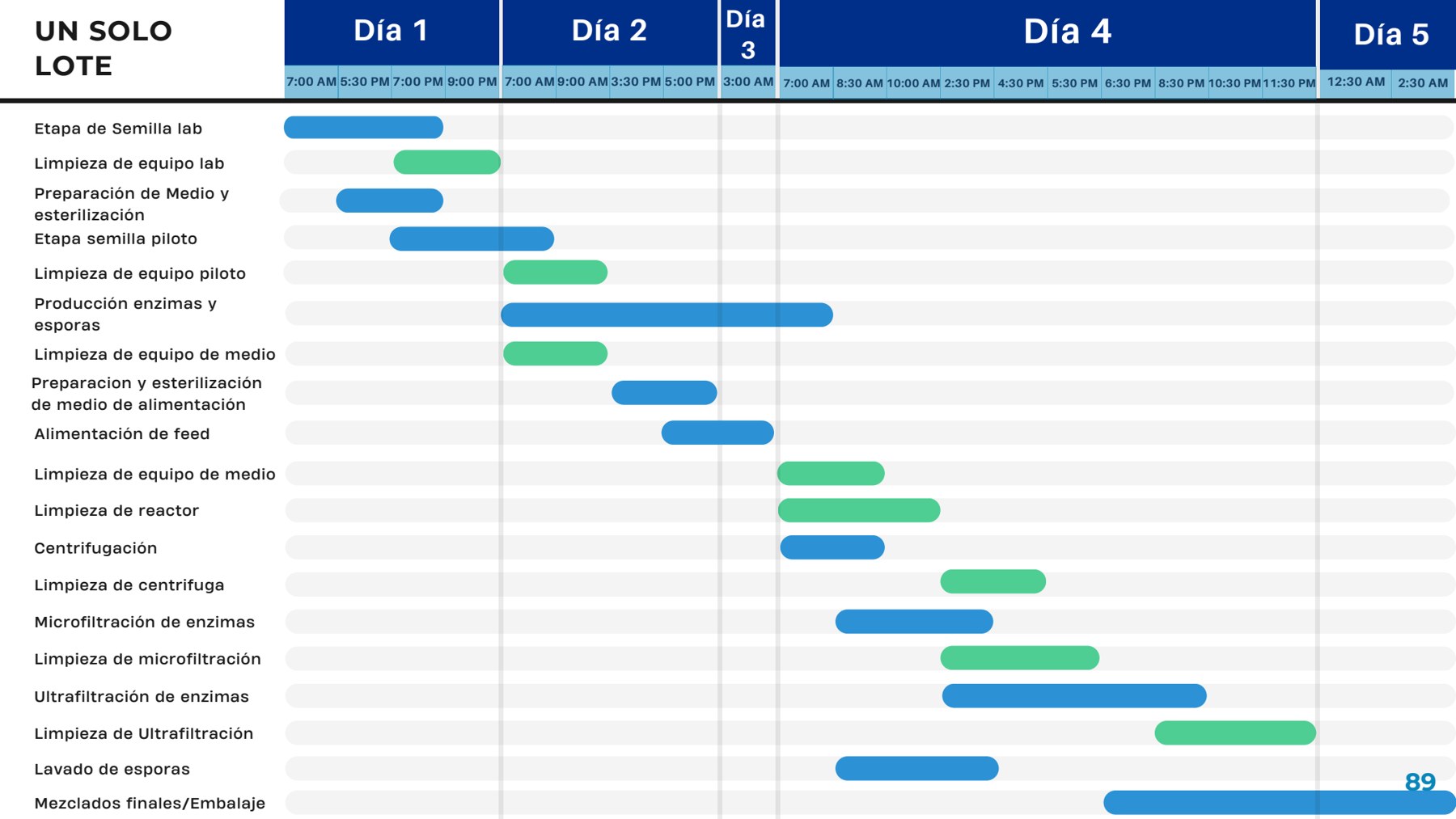
The project schedule connects seed stages, production, downstream processing, and cleaning across a batch.
Original slides from our final team presentation · Academic design assumptions and modeled results
Enzyme activity, spore behavior, formulation stability, and the link between a biological system and a useful product.
Mass and energy balances, equipment selection, separation, utilities, scheduling, and plant layout.
Quality and validation plans, safety, environmental considerations, and scenario-based economic evaluation.
GENOMICS · TEAM ANALYSIS
Start with the biological question. Then evaluate the technology.
In a team assignment, we evaluated a sequencing approach for a plant-genomics case involving compounds of pharmaceutical interest. Our presentation proposed Illumina sequencing by synthesis and explained the reasoning behind that choice.
We connected the genome-analysis objective with genes, enzymes and biological pathways relevant to the assigned case.
We proposed Illumina sequencing by synthesis and evaluated its fit for the assigned plant-genomics case.
We weighed read length, repetitive regions, library preparation and bioinformatics requirements alongside the method’s advantages.
A team presentation covering the case, a proposed sequencing approach, its theoretical basis, and a comparison of advantages and limitations.
Completed classroom analysis. We did not generate sequencing data or carry out a laboratory sequencing experiment for this assignment.
EXPERIMENTAL TEAM PROJECT · 2023
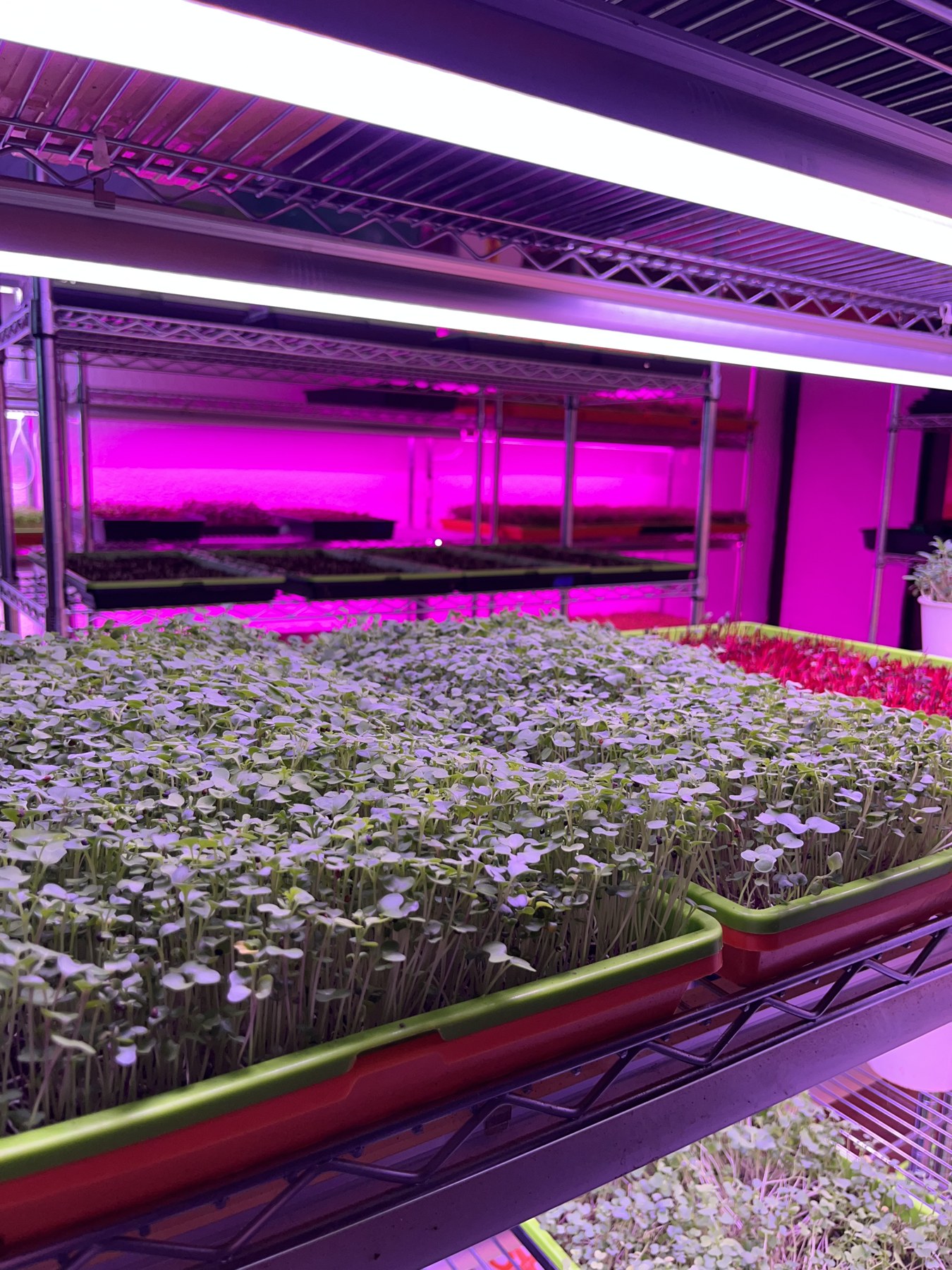
Testing whether an amino-acid treatment could support early plant growth.
In a client-based team project with City Root Farms, I helped develop and apply an amino-acid biostimulant, collect measurements, and statistically analyze its effect on coriander microgreens.
Reported results from this academic experiment. They describe the project’s conditions, not a general performance guarantee.
EXPERIMENTAL PROJECT · 2023
Looking beyond how much protein is made to how much is soluble.
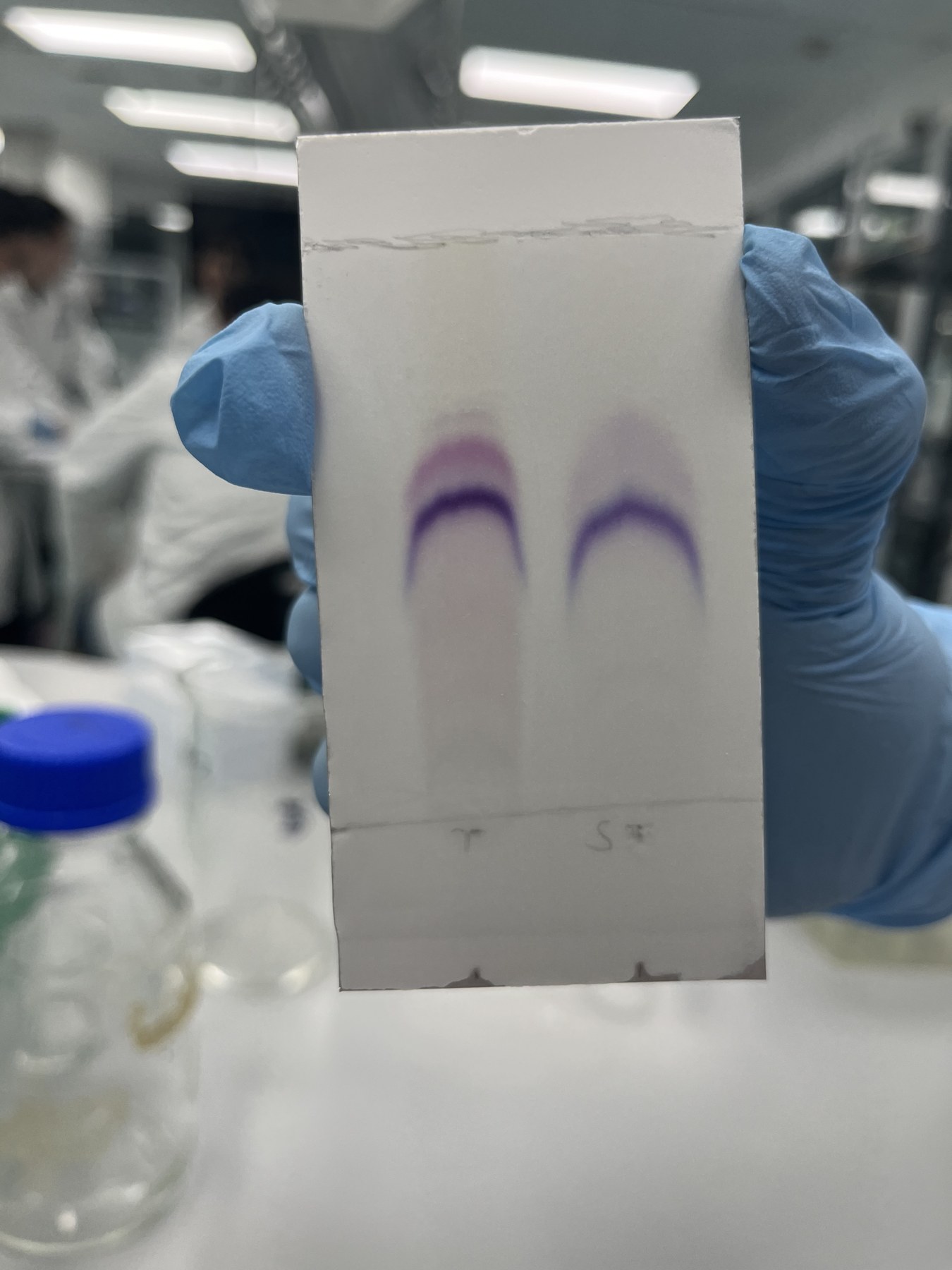
I investigated mCherry production in E. coli BL21 Star(DE3) with pET28b(+), testing different cold-shock durations and examining their effect on soluble protein production.
Bacterial transformation, culture handling, controlled experiments, protein quantification, and comparison of treatment conditions.
The project connected experimental conditions with two separate outcomes: total protein yield and its soluble fraction.
BIOTECHNOLOGY / BEYOND THE CLASSROOM
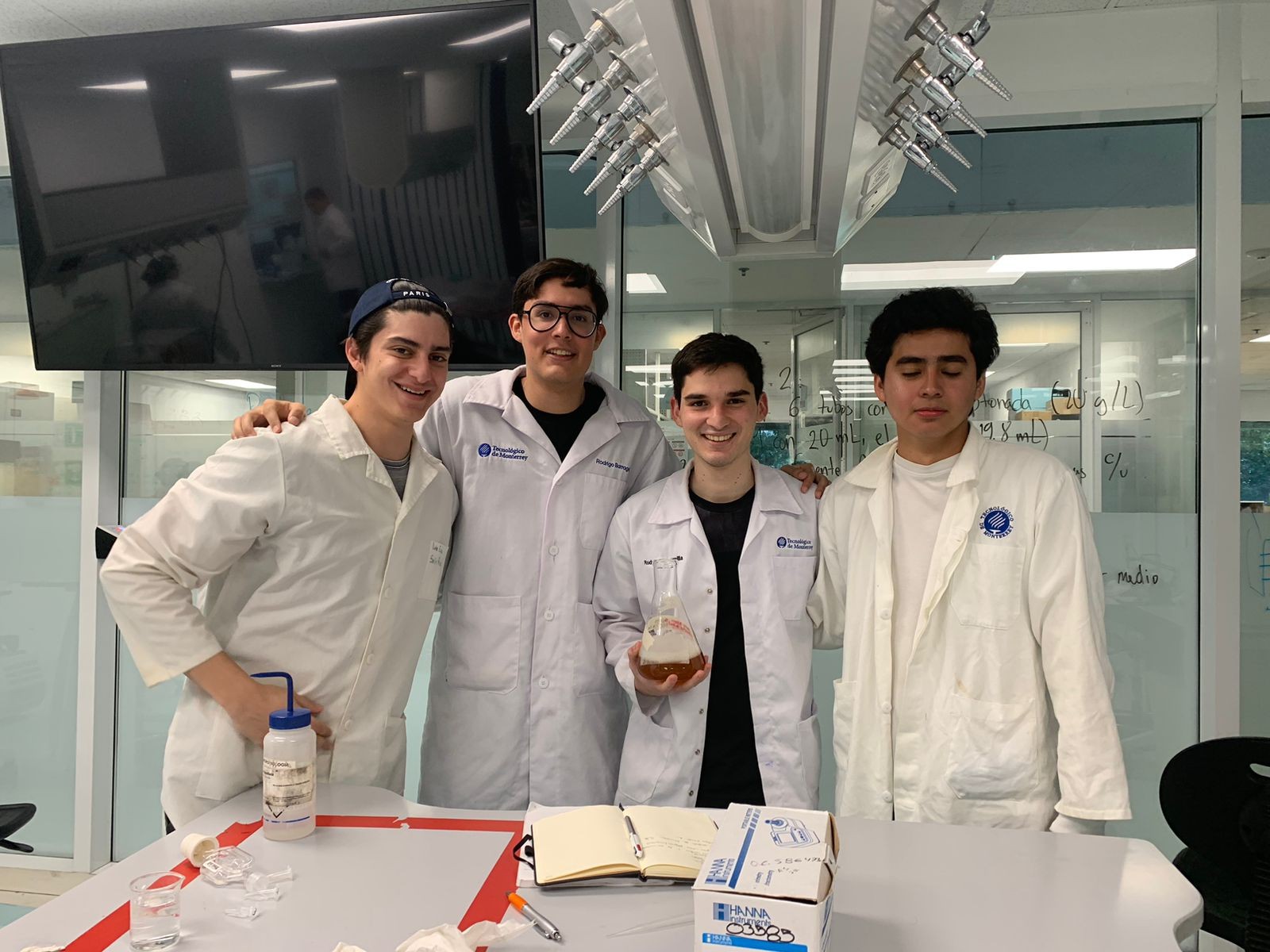
Classmates, hands-on learning,
and graduation day.
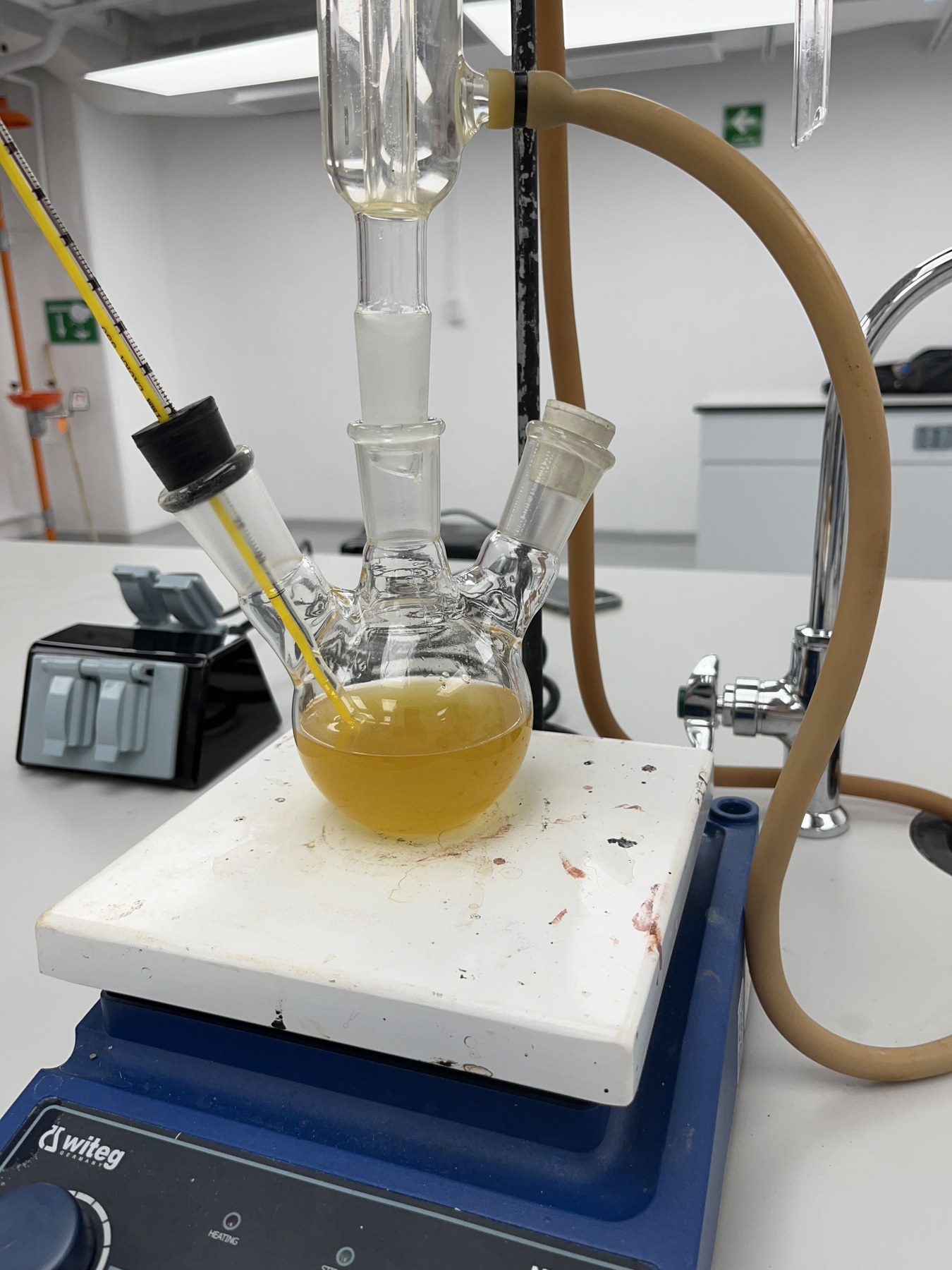
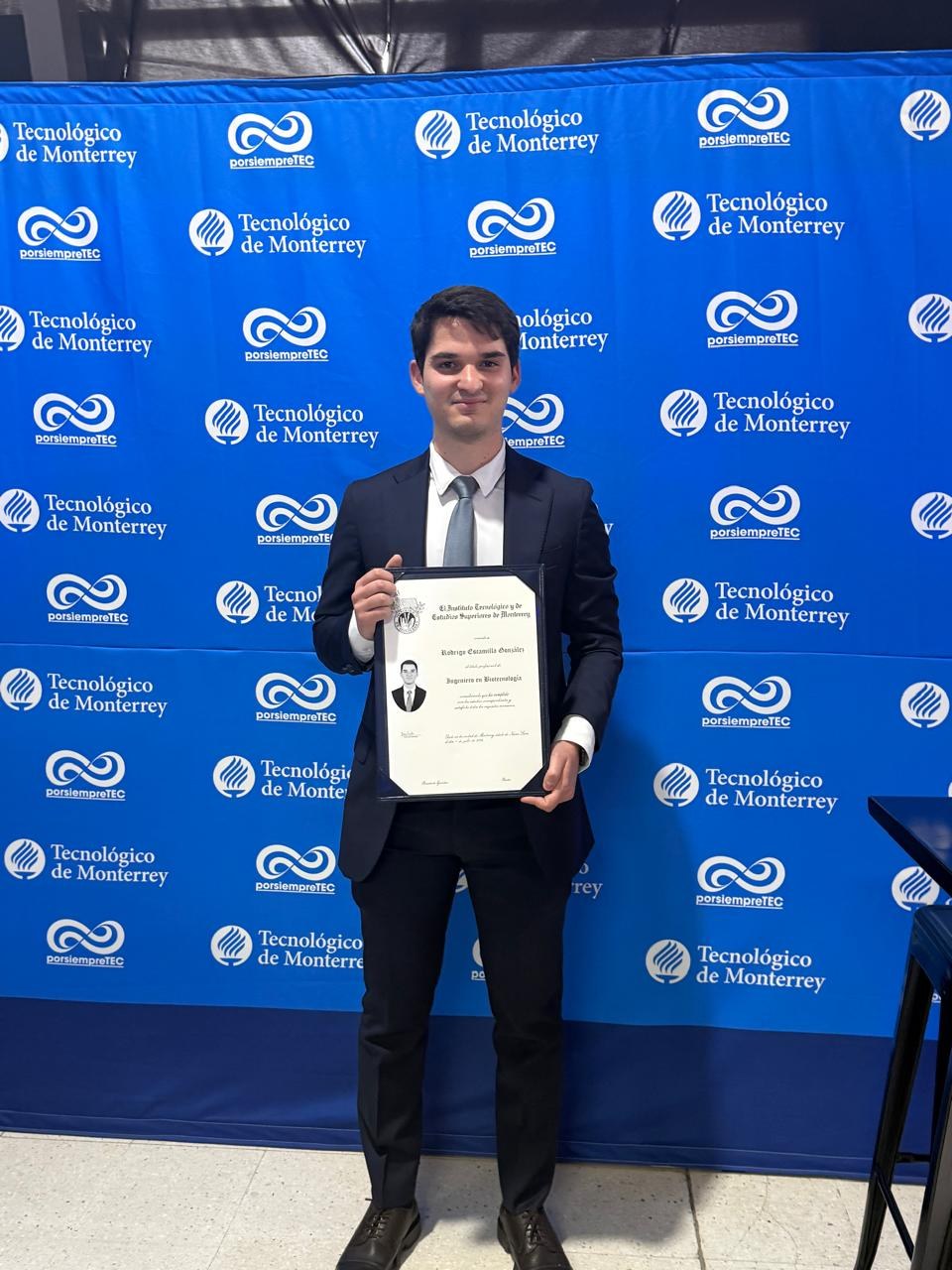
LABORATORY TRAINING
Practical experience across separation, analysis, molecular biology, culture and sterilization. The images below are equipment references.
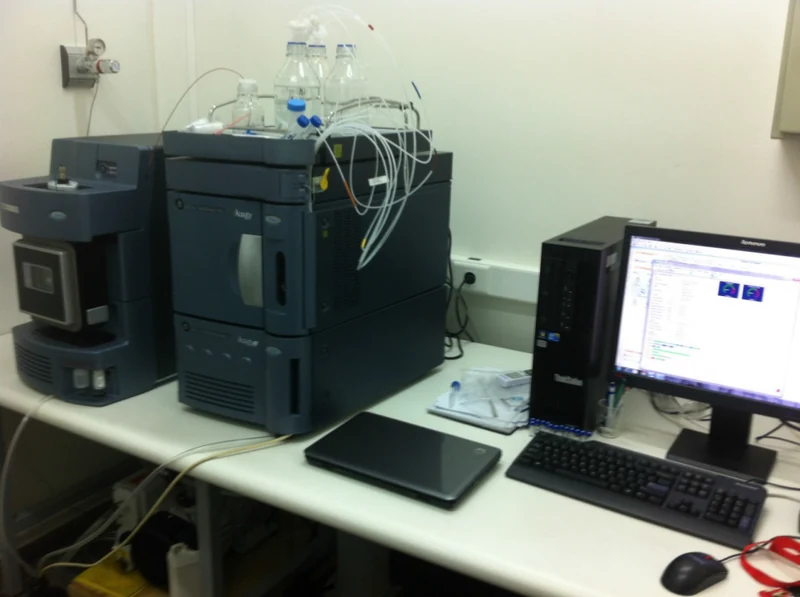
High-performance liquid chromatography for separating and analyzing components of a mixture.
Equipment reference photograph
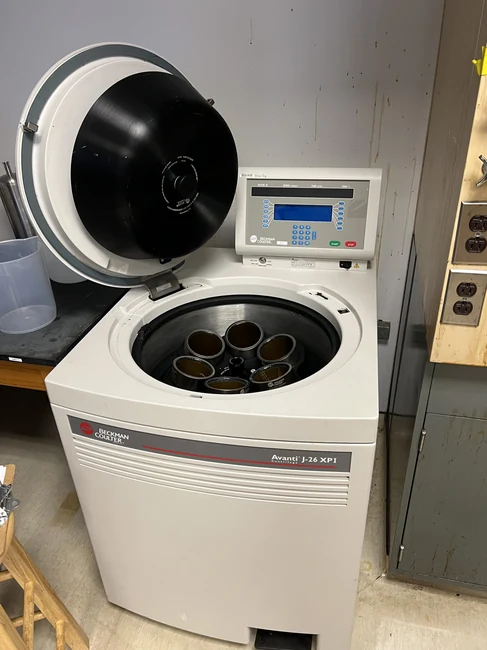
Centrifugal separation for collecting cells or separating sample fractions.
Equipment reference photograph
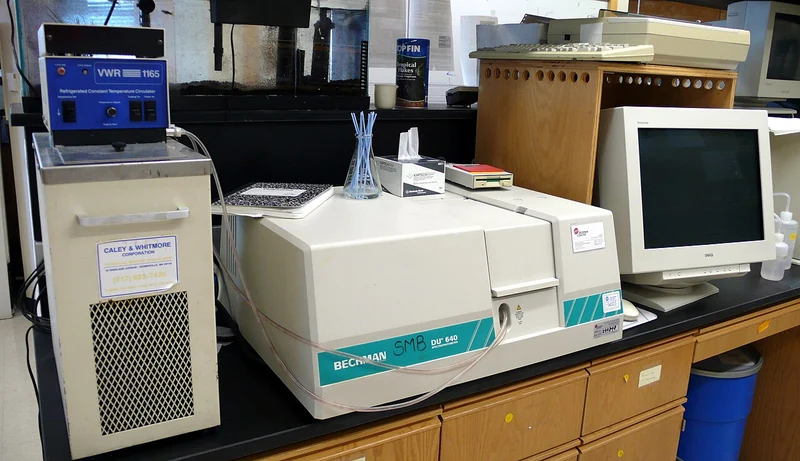
Absorbance measurements for analytical work and concentration estimation.
Equipment reference photograph
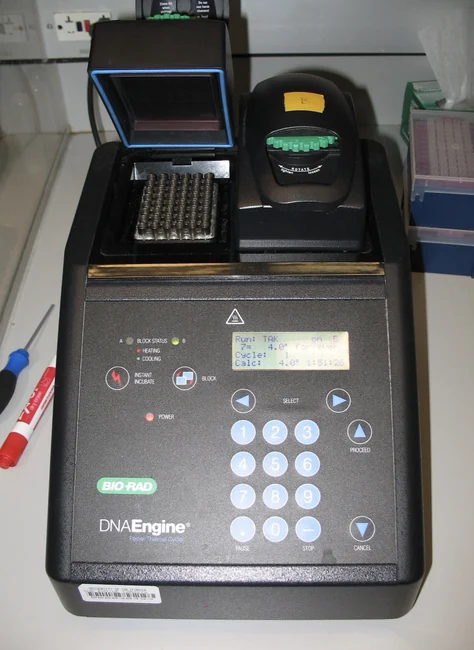
Thermal cycling to amplify a selected DNA region.
Equipment reference photograph
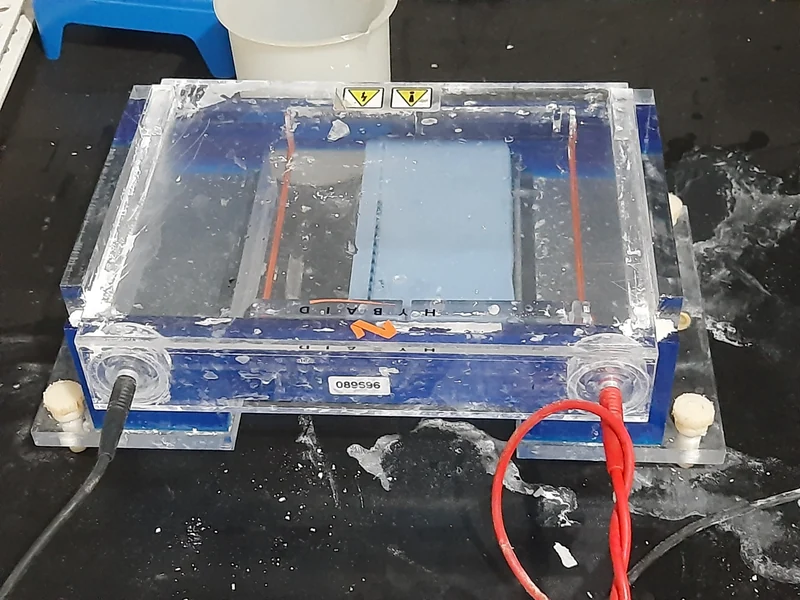
Separating biological molecules in a gel under an electric field.
Equipment reference photograph
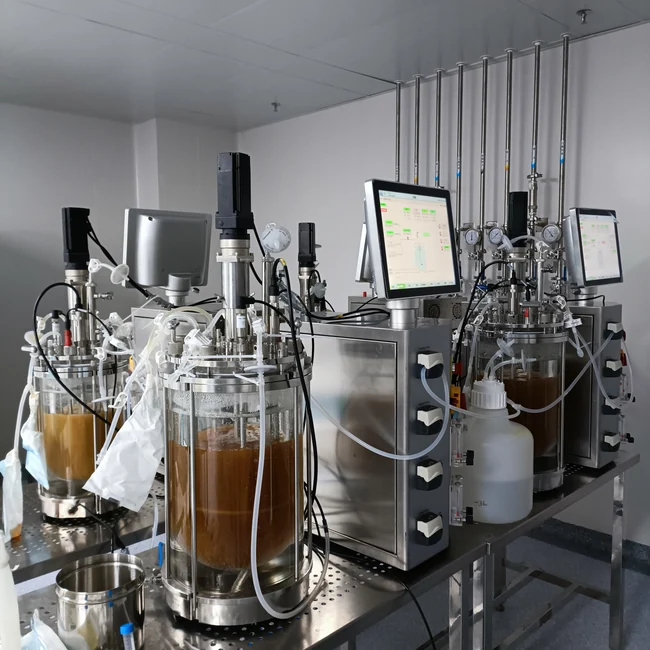
Cultivation in a controlled vessel, connecting biological growth with process conditions.
Equipment reference photograph
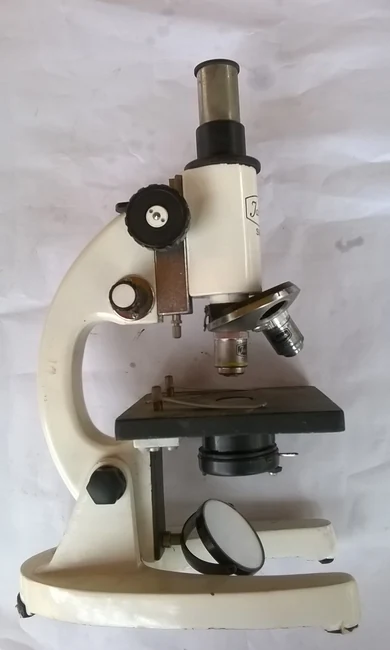
Observing cells and sample features that are not visible to the unaided eye.
Equipment reference photograph
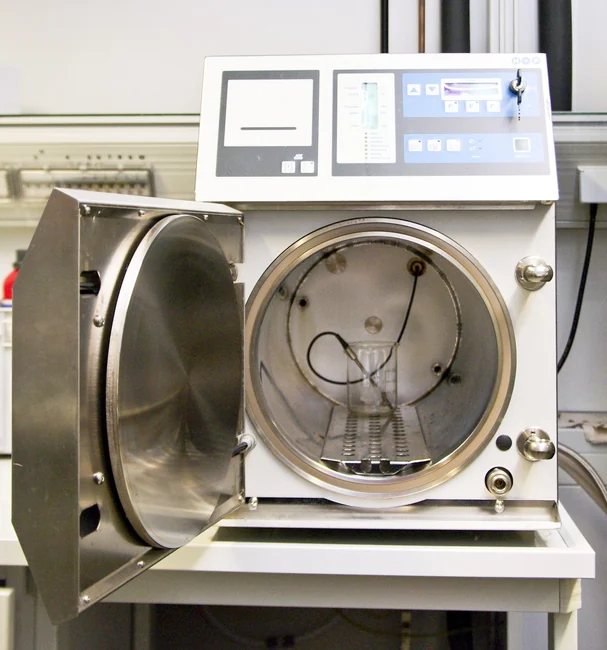
Steam sterilization of suitable laboratory materials and media.
Equipment reference photograph
Images illustrate the techniques; they do not identify the exact instruments or facilities where I trained.
In the Sustenzia capstone, I also worked on equipment selection and integration for an academic manufacturing process: bioreactors, centrifugation, microfiltration, ultrafiltration, formulation, and filling. These were engineering-design tasks, separate from the practical training listed above.
Explore the interactive process model →General reference: Thermo Fisher scientific techniques and Eppendorf bioprocess equipment.